Corporate law, M&A
Founding a company
Anyone who wants to set up a company alone or together with one or more other persons is faced with the question of the legal form in which they want to operate this company. The law provides a whole range of different company and legal forms for this purpose. However, these differ in many respects, for example with regard to personal liability for the company's liabilities, the mandatory capital resources required, the obligation to publish accounting documents, the options for structuring the company constitution and, in particular, with regard to the taxation of the company and its owners.
You can find an overview of the most common legal forms for SMEs here. In any case, qualified legal advice is recommended to ensure that the company has the right legal form from the outset and is thus well positioned for the future.
One aspect of the choice of legal form can also be the time and effort required to set up the company and the time this takes. This applies in particular to those company forms where entry in the commercial register is mandatory for the company to come into existence or for a limitation of liability to take effect, as this takes a certain amount of time. In this case, it may be advisable to use a so-called shelf company instead of founding a new company yourself. The VOELKER Group also offers you this service.
M&A - company acquisition: the process of an M&A transaction
In recent years, company acquisitions have developed into an independent consulting discipline. The term "Mergers & Acquisition" is used to describe a large number of different transactions in which either the ownership of a company changes hands through a sale (acquisition) or companies merge or enter into some other form of combination (merger). Specialized M&A consultants accompany these transactions as brokers, investment managers, financial advisors or tax consultants.
The legal side of a company acquisition is usually covered by specialized commercial lawyers with a background in commercial and corporate law. These commercial lawyers have the necessary expertise to successfully manage and structure the complex transaction process, which includes legal, tax, commercial and financial aspects.
VOELKER has a team of lawyers who, as specialists in commercial and corporate law, are all particularly qualified to provide comprehensive advice to sellers or buyers in corporate transactions. VOELKER has developed a special expertise in advising small and medium-sized companies from its many years of assisting with company acquisitions in the SME sector. A certain process sequence has proven to be standard for structuring a transaction for the acquisition or sale of a company. Such a transaction process usually takes several months and is sometimes particularly dynamic. Good preparation and experienced advisors are important success factors here.
Disputes within the company
Disputes between shareholders or disputes between shareholders and managing directors are usually complex, protracted and hard-fought. The intensity of the disputes can distract from the actual tasks and interests of the parties involved, i.e. the further development of the company. Not infrequently, the economic dimension of a dispute can even jeopardize the existence of the company.
When it comes to the voluntary or forced departure of shareholders or managing directors, the quality of legal and tax advice can set the course for the outcome of the conflict at an early stage - this applies to GmbHs and stock corporations, but also to partnerships such as GbRs, KGs, OHGs and GmbH & Co KGs.
VOELKER's specialist lawyers for commercial and corporate law, supplemented where necessary by auditors and tax advisors, will advise you in corporate law conflict cases - a competence that was expressly confirmed by the JUVE Handbook of Commercial Law Firms in its 2016/2017 edition.
Your lawyers
-
-
 Dr. Karsten Amann Specialist lawyer for commercial and corporate law, Partner
-
 Daniel Bachmann, LL.M. Lawyer
-
 Dr. Wolfgang Beckmann Specialist lawyer for commercial and corporate law, Advisory board
-
 Dr. Julian Bubeck Specialist lawyer for international business law, Partner
-
 Naomi Dura Specialist lawyer for commercial and corporate law
-
 Dr. Thorsten Höhne Specialist lawyer for commercial and corporate law, Specialist lawyer for tax law
-
 Sandra Maier Lawyer
-
Services
- Gesellschafterstreitigkeiten und Prozessführung
- Organberatung und Organhaftung
- Buying and selling businesses
- Rechtliche Begleitung von Gesellschaften
- Unternehmensgründungen und Wahl der Rechtsform
- Umstrukturierungen und Umwandlungen
- Unternehmensnachfolge
- Beratung kommunaler Unternehmen
- Beratung in der Krise
- Transparency Registry
Häufige gesellschaftsrechtliche Fragen
Wann haftet ein Geschäftsführer persönlich?
Wie kann ein Gesellschafter aus einer GmbH ausgeschlossen werden?
Was ist bei einem Unternehmenskauf rechtlich zu prüfen?
Was kostet die Gründung einer GmbH und wie lange dauert sie?
Wie kann ich meine GbR in eine GmbH umwandeln, ohne dass sämtliche Verträge betroffen sind?
Recent posts
-
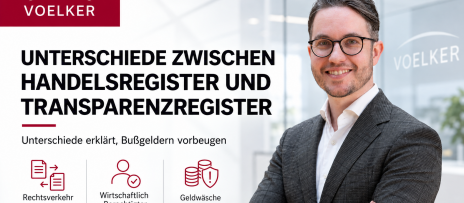
Commercial Register and Transparency Register—what's the difference?
-
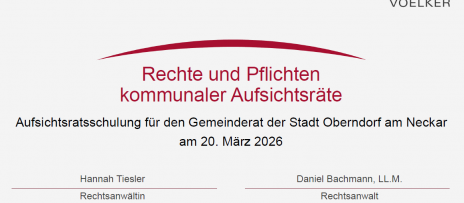
Training on the Rights and Duties of Municipal Supervisory Board Members in Oberndorf am Neckar
-
Two cabinets are required—the transfer of customer data in compliance with data protection laws when buying or selling business operations as an asset deal

-
Scope of the registry court’s review in the event of a change in management
Decision of the Berlin Court of Appeal dated October 5, 2022 – 22 W 54/22